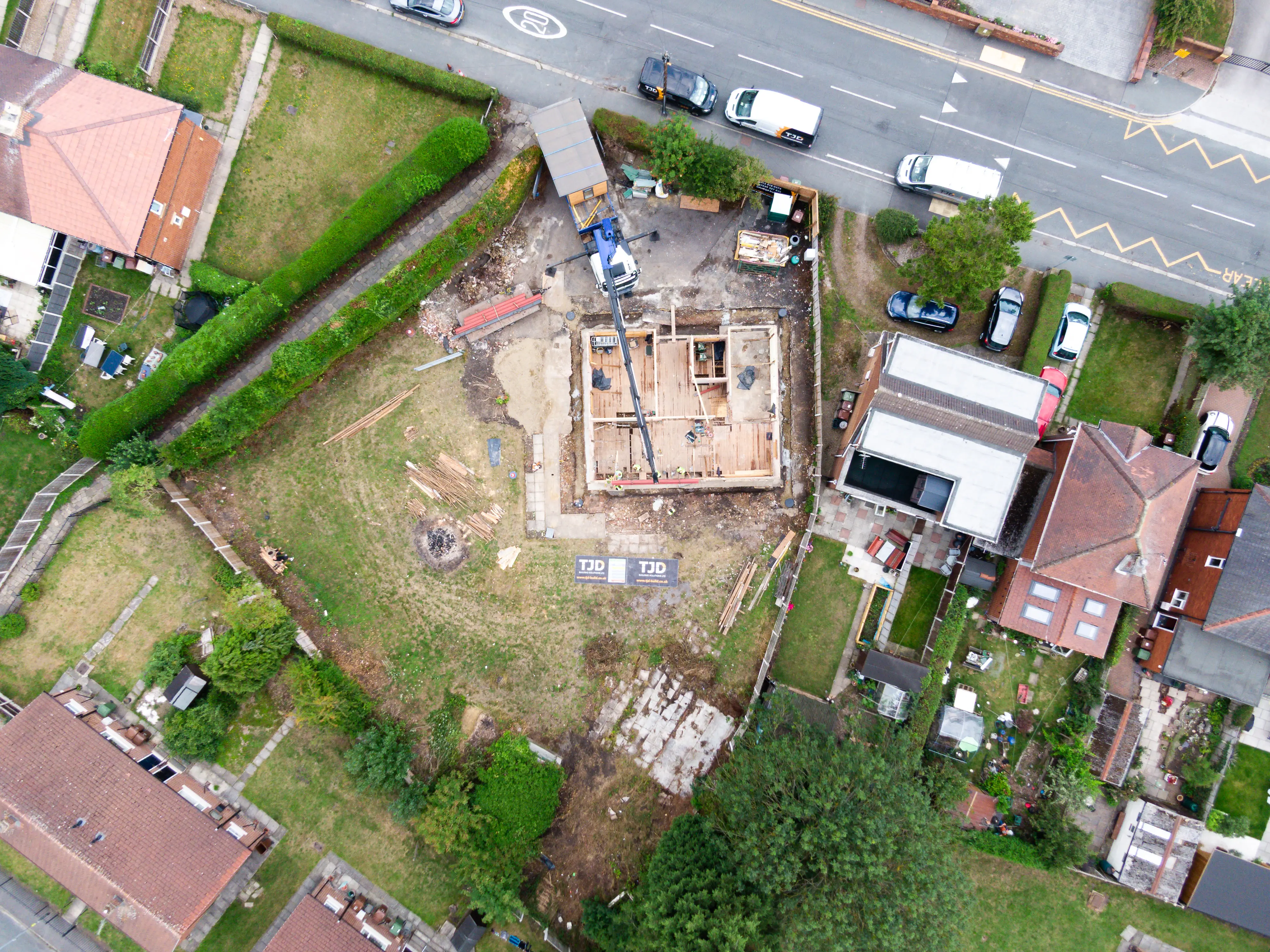


Building Control and Planning Permission
First, it is important to recognise that Building Control and Planning Permission are two entirely separate requirements.
In simple terms, Planning Permission is about deciding whether a development, however big or small, should go ahead. This is a decision made by your local planning authority.
Building Regulations, which are overseen through Building Control, are required to ensure that any new building work meets the relevant building standards and regulations. These regulations are in place to protect the health and safety of people within the built environment.
Building Control does this by reviewing the plans and details submitted with an application and then inspecting the construction work as it progresses on site.
These inspections can include foundations, damp proofing, structural works, insulation, ventilation, heating and fire protection.
Meeting these requirements is the responsibility of both the company carrying out the building work and the owner of the property. Building work must be inspected and verified to ensure that the relevant Building Regulations have been successfully met.
Failure to comply can prove costly, both financially and in terms of time that could be better spent progressing and completing your project.
How do I know if I need Building Control approval?
Some building projects are exempt from Building Regulations. However, if you are planning to carry out building work, it is always best to check whether Building Regulations apply to your specific project.
Doing this at the beginning can help avoid unnecessary interruptions or delays to your works.
Examples of projects where a Building Control application may be required include:
- Extensions
- Loft conversions
- Structural alterations
- Changes to the layout or structure of a property
- Other significant building works
The Building Control process
Before making your application, it can be beneficial to discuss your proposals with an experienced architect or other suitably qualified professional. This can help you understand what is required and potentially move your project forward more efficiently.
Types of applications
Building Notice; A Building Notice is generally most suitable for smaller or less complex projects, such as a small extension or certain internal alterations.
A Building Notice should normally be submitted at least 48 hours before work starts.
Full Plans Application
A Full Plans Application is a more detailed application and is generally suitable for larger or more complex projects.
For a Full Plans submission, you will need to prepare, or have prepared, detailed drawings and plans of your proposals to a suitable scale. Depending on the project, you may also need structural calculations and other supporting information.
The main difference between the two methods is that a Building Notice does not normally require the submission of detailed plans, whereas a Full Plans Application does.
Who carries out the Building Control inspections?
There are different routes available for obtaining Building Regulations approval. You will need to decide whether you want to use your local authority’s Building Control department or an Approved Inspector/Building Control Approved Inspector.
Most local authorities have their own Building Control departments, and you can submit your project directly to them. They will assess the application and carry out inspections throughout the project before issuing the relevant completion documentation, provided the work complies with the Building Regulations.
Alternatively, you can use a private Building Control Approved Inspector. They can review and assess information provided by your architect, builder, structural engineer and other professionals involved in the project. They will also carry out the required site inspections and, where the work complies with the Building Regulations, issue the appropriate completion documentation.
Starting the process
Once you have decided which route you are going to take, the first step is to establish whether your project requires a Full Plans Application or whether a Building Notice is appropriate.
You can then complete the relevant application and submit it to the appropriate Building Control body, along with any additional information required, such as drawings, specifications or structural calculations, and pay the appropriate fee.
Initial Notice
Where an Initial Notice is required, this must be submitted before work begins. Building work should not start until the relevant Building Control process has been accepted and you have confirmation that you can proceed.
Starting work
You should also notify Building Control before work starts on site, in accordance with the requirements of your application.
It is important to keep Building Control informed throughout the project and ensure that the required inspections are arranged at the appropriate stages.
Site inspections
As building work progresses, inspections will be carried out at various stages of the development to check that the work complies with the Building Regulations.
The number and type of inspections required will depend on the type and complexity of the project. Smaller or minor works may require fewer inspections, while larger and more complex projects will generally require inspections at several key stages.
The final stage
Once the work is complete, a final inspection will be carried out.
If the completed work meets the requirements of the Building Regulations, the relevant completion documentation will be issued.
It is important to retain this documentation safely, as it may be required in the future, particularly if you decide to sell your property.
Hopefully, this blog has given you a useful insight into Building Control and the process involved.
If there is anything we haven’t covered or you have questions about your own project, please get in touch. We would be more than happy to help and point you in the right direction.
TJD-BUILD LTD
Easy steps to create a color palette
Lorem ipsum dolor sit amet, consectetur adipiscing elit lobortis arcu enim urna adipiscing praesent velit viverra sit semper lorem eu cursus vel hendrerit elementum morbi curabitur etiam nibh justo, lorem aliquet donec sed sit mi dignissim at ante massa mattis.
- Neque sodales ut etiam sit amet nisl purus non tellus orci ac auctor
- Adipiscing elit ut aliquam purus sit amet viverra suspendisse potent
- Mauris commodo quis imperdiet massa tincidunt nunc pulvinar
- Excepteur sint occaecat cupidatat non proident sunt in culpa qui officia
What is a color palette?
Vitae congue eu consequat ac felis placerat vestibulum lectus mauris ultrices cursus sit amet dictum sit amet justo donec enim diam porttitor lacus luctus accumsan tortor posuere praesent tristique magna sit amet purus gravida quis blandit turpis.

Don’t overspend on growth marketing without good retention rates
At risus viverra adipiscing at in tellus integer feugiat nisl pretium fusce id velit ut tortor sagittis orci a scelerisque purus semper eget at lectus urna duis convallis porta nibh venenatis cras sed felis eget neque laoreet suspendisse interdum consectetur libero id faucibus nisl donec pretium vulputate sapien nec sagittis aliquam nunc lobortis mattis aliquam faucibus purus in.
- Neque sodales ut etiam sit amet nisl purus non tellus orci ac auctor
- Adipiscing elit ut aliquam purus sit amet viverra suspendisse potenti
- Mauris commodo quis imperdiet massa tincidunt nunc pulvinar
- Adipiscing elit ut aliquam purus sit amet viverra suspendisse potenti
What’s the ideal customer retention rate?
Nisi quis eleifend quam adipiscing vitae aliquet bibendum enim facilisis gravida neque euismod in pellentesque massa placerat volutpat lacus laoreet non curabitur gravida odio aenean sed adipiscing diam donec adipiscing tristique risus amet est placerat in egestas erat.
“Lorem ipsum dolor sit amet consectetur adipiscing elit, sed do eiusmod tempor incididunt ut labore et dolore magna aliqua enim ad minim veniam.”
Next steps to increase your customer retention
Eget lorem dolor sed viverra ipsum nunc aliquet bibendum felis donec et odio pellentesque diam volutpat commodo sed egestas aliquam sem fringilla ut morbi tincidunt augue interdum velit euismod eu tincidunt tortor aliquam nulla facilisi aenean sed adipiscing diam donec adipiscing ut lectus arcu bibendum at varius vel pharetra nibh venenatis cras sed felis eget.